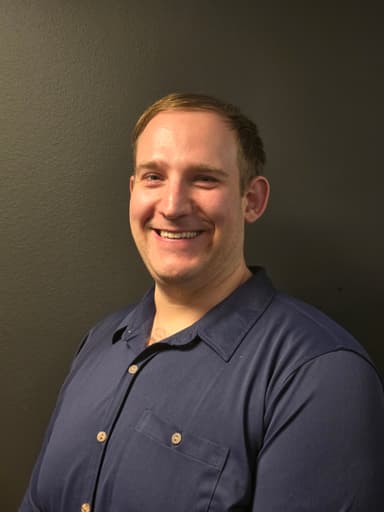
Hi! I'm Roland Sauter.
I'm a software engineer, (data) scientist, and generally a nerd based in Oslo, Norway. This is my first attempt at a personal website, so expect it to evolve over time.
These days I work at the intersection of software engineering, data science, and optimization: everything from models that save customers millions of kroner, to work processes that improve maintenance and safety, to AI integrations that inform busy engineers.
The problems I enjoy most are the ones that start out ill-defined — where the customer is not yet sure what they need, or someone else has already called it impossible. Most of what makes that work is explaining complicated things clearly and being comfortable across disciplines, languages, and cultures.
- location
- Oslo, Norway
- education
- PhD, Bioinformatics
- languages
- German, English, Norwegian
- focus
- optimization, data, AI
Core skills
data scientist & software engineer with broad competences, and a fast learner
- Optimization — linear, nonlinear, and integer programming on real production problems
- End-to-end data science and data engineering, from pipeline to deployed model
- Turning ill-defined problems into shipped systems, usually alongside the customer
- Collaboration across disciplines, backgrounds, and cultures
Software Engineer → Senior → Staff Engineer
- Optimization of production and planning — MEG optimization for Shell at Ormen Lange replaced a manual spreadsheet process with a nonlinear model, saving millions of kroner and powering thousands of additional UK households, and later optimization work for ADNOC
- Built features across an industrial digital twin — time-series analytics, predictive maintenance, and later the platform team for generative AI
- Designed the domain model and technical architecture for a fault-finding workflow, spanning configurable user personas, role-based access control, and notifications
- Contributed to the integrated industrial AI copilot — answer-quality evaluation, consent and prompt analytics, and multi-modal prototypes — and built an AI-assisted inspection follow-up workflow for Vår Energi
- Led multiple teams of summer interns building computer vision and RAG tooling
- Ran the group's CI/CD and Kubernetes deployments on Azure using Helm
- Hired and mentored many junior developers, and stood in as interim department manager
- Employee representative on the board of directors (2025-2026), and Tekna representative (2022-2026)
My toolbox
the most important tools I'm using
Languages
Data science and AI
Data engineering
Web
Infrastructure
Ways of working
Coming soon…
The VPS this website is hosted on serves as the staging ground for some projects. Currently these are still under development.
PhD in Natural Science (Bioinformatics)
My research applied mathematical models to biology and medicine — optimization models, network analysis, and statistics over large biological datasets. Much of the work was building the pipelines to get there, and releasing them as open-source tools others could reuse.
GEMCAT
open sourceA modeling tool to predict metabolite concentrations.
Thesis
defended 2025Metabolites at Genome-Scale: Towards Genome-Scale Modeling Strategies for Metabolite Concentrations — defended in 2025 at UiT The Arctic University of Norway in Tromsø.
code available on request — repo is private due to privacy concerns around some content
Publications
GEMCAT — a new algorithm for gene expression-based prediction of metabolic alterations
NAR Genomics and Bioinformatics, 2025
academic.oup.com/nargab →
Accounting for NAD Concentrations in Genome-Scale Metabolic Models Captures Important Metabolic Alterations in NAD-Depleted Systems
Metabolites, 2024
mdpi.com/journal/metabolites →
Talks
Digital Twins in Systems Medicine: Opportunities and Challenges for Genome-Scale Metabolic Models — doctoral trial lecture, UiT, 2025. A topic set by the committee, which happened to land exactly between my research and my day job.
Bridging the gap between process simulators and real data with Hybrid ML — NorwAI Innovate, 2024.
Teaching
I designed and taught an introductory Python and software engineering course for life scientists, at PhD and master's level. It is still running.
Research visit
Six months as a guest researcher working on dynamic metabolic models over large datasets, and on making those computations efficient enough to be practical.
Reading that left an impression on me
I enjoy reading about different topics, from technology to history, science to philosophy. A few books have left a lasting impression on me, and I'd like to share them here.
Thank You For Arguing — Jay Heinrichs
Beyond the obvious practice of rhetoric, this book taught me to see the world through the lens of persuasion more so than as having to be right. It changed how I communicate with others and how I understand them, helping me in a critical phase of my life.
Code — Charles Petzold
My introduction to the world of computers and information technology.
Politics and the English Language — George Orwell
Probably the most useful text on writing and language I've ever read.
Read it at the Orwell Foundation →